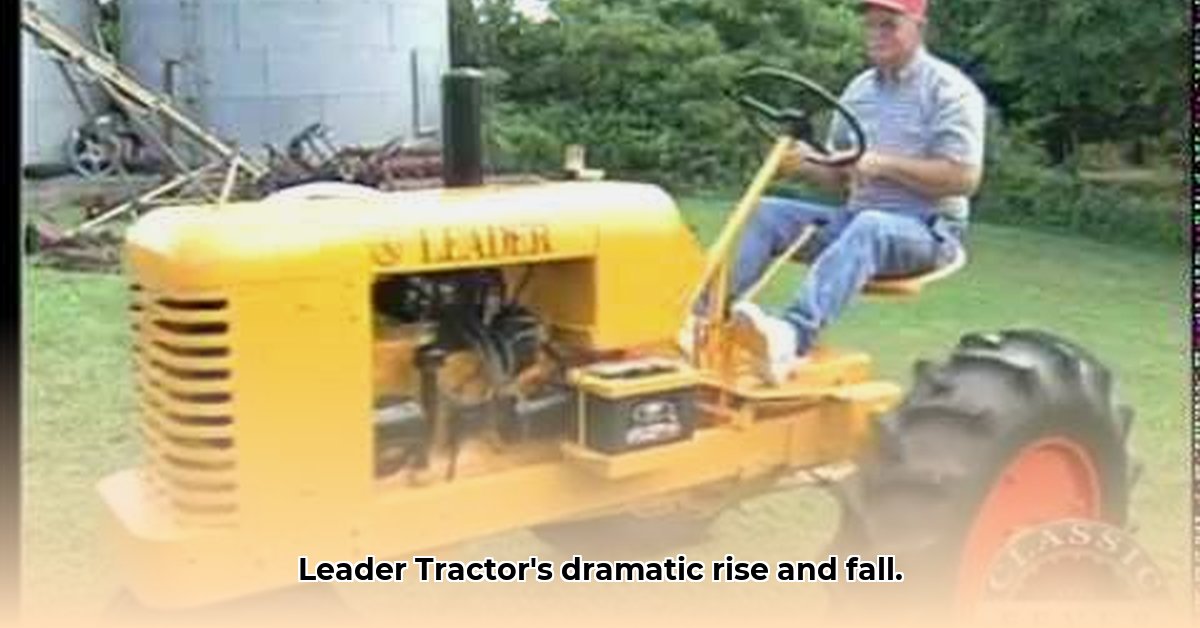
Tractor Leader: A Story of Innovation, Dependence, and Demise
The Leader Tractor Company's story is a quintessential American entrepreneurial saga—a blend of innovative brilliance, ambitious expansion, and ultimately, a cautionary tale of devastating failure. The narrative unfolds against the vibrant backdrop of post-World War II America, a period characterized by both booming optimism and rapid technological advancements in the agricultural sector. Imagine the Ohio countryside of the 1940s: vast fields stretching to the horizon, farmers toiling under the relentless sun, and a small, determined company poised to revolutionize their arduous work. For more on early tractor technology, see this site on antique tractors.
Leader Tractor burst onto the scene with a powerful, compact tractor that was significantly ahead of its time. Their distinguishing feature? A revolutionary hydraulic lift system. This innovation allowed farmers to effortlessly raise and lower heavy implements, dramatically increasing efficiency and significantly reducing physical strain. Word of this technological marvel spread like wildfire. Farmers, always seeking advancements that promised a better life, eagerly sought these machines. Demand surged, propelling the company into a period of phenomenal growth. A crucial partnership with the Schott Brothers, a major agricultural distributor, further boosted sales and provided what appeared to be a solid financial foundation. For a time, Leader Tractor seemed destined for lasting success. However, lurking beneath the surface was a significant, and ultimately fatal, flaw.
Their rapid ascent, however, was built upon a precarious foundation. Leader Tractor's tractors were entirely dependent on engines supplied by Chevrolet. This reliance on a single supplier, seemingly inconsequential in the early stages, proved to be their undoing. When post-war economic turbulence caused supply chain disruptions, Leader Tractor was forced to make a difficult decision—switching engine suppliers to Hercules. While this short-term solution kept them afloat, it exposed the company’s inherent fragility and highlighted a critical flaw in their business strategy: a lack of diversification within their supplier network. This over-reliance on a single source for a crucial component rendered their future vulnerable to even minor supply chain disruptions. Many seasoned business experts would later cite this oversight as a primary contributing factor to Leader Tractor’s ultimate collapse.
The Schott Brothers’ pivotal loan added another layer of complexity to the narrative. While the initial partnership provided significant benefits, the loan agreement included an unusual clause—a “pay-on-demand” provision. This meant that the Schott Brothers could demand immediate repayment at any time. For a young company like Leader Tractor, this stipulation introduced significant financial risk. Such a clause is inherently risky for any business, especially one navigating the volatile post-war agricultural equipment market. The terms could be interpreted as predatory or, conversely, as a calculated risk by the Schott Brothers. Historians and business analysts continue to debate the intricacies of this facet of Leader Tractor's story. Did the Schott Brother's risk appetite accurately anticipate the market's instability, or were they unduly leveraging the company's early success? This question remains a topic of discussion.
The inevitable downturn arrived in 1949. Unable to meet the unexpected debt repayment demanded by the Schott Brothers, the company rapidly spiraled into financial distress. The financial burden proved insurmountable. Their relatively small size, compared to industry giants like John Deere and Farmall, became a significant disadvantage. These established companies possessed far greater economies of scale, more extensive distribution networks, and significantly deeper financial reserves. Leader Tractor simply couldn't compete in the long term. The company was forced to cease operations, marking a tragic end to a promising chapter in American agricultural innovation. How could such a promising innovator meet such an abrupt and decisive end?
How Did Supply Chain Issues Contribute to the Failure of Leader Tractor Company?
Leader Tractor’s story provides a compelling case study in the importance of supply chain resilience. While several factors contributed to its downfall, its over-reliance on a single engine supplier exacerbated existing vulnerabilities and ultimately sealed its fate.
The Rise and Fall of a Hydraulic Revolution
Leader Tractor's initial success was undeniably fueled by its groundbreaking hydraulic lift system. This technological advancement revolutionized farming, dramatically increasing efficiency and worker productivity. Their early years were marked by substantial growth and a strong market position. However, their subsequent struggles underline the importance of supply chain diversification and adaptability.
Supply Chain Vulnerabilities: A Precarious Foundation
In their pursuit of cost efficiency, Leader Tractor made the fateful decision to rely heavily on a single supplier for essential engine components. This decision, seemingly insignificant at the time, proved to be incredibly risky. When unforeseen circumstances—such as supply chain disruptions—occurred, Leader Tractor was left unable to meet production demands. The absence of alternative suppliers compounded the crisis, highlighting a critical oversight in their supply chain risk management strategy. This single point of failure served as a catalyst for their eventual collapse.
Production Halts and Financial Strain: A Domino Effect
The disruption in the supply of critical parts brought production to a standstill. Unsatisfied customers canceled orders; reputational damage compounded their financial woes. The company's inability to react decisively only intensified the crisis. Could a more diversified supplier network have mitigated the impact? Unquestionably. The absence of such a strategy contributed directly to their inability to weather the storm.
Building a Resilient Supply Chain: Lessons Learned
Leader Tractor's collapse provides invaluable lessons about supply chain management. First and foremost, supplier diversification is crucial. Relying on a single source for critical components introduces unacceptable risk. Second, robust contingency plans are essential. Leader Tractor lacked a proactive strategy for navigating supply chain disruptions. Therefore, thorough risk assessments, scenario planning, and the development of flexible sourcing arrangements are paramount.
The Legacy of Leader Tractor: A Cautionary Tale
Leader Tractor’s downfall serves as a stark reminder that even the most innovative companies can be brought down by overlooked supply chain vulnerabilities. It's not just a story of failure; it's a powerful case study in the importance of supply chain resilience and proactive risk management, underscoring the crucial need for preparedness in today's global economy. The long-term impact of their innovative hydraulic lift system endures, even as their story serves as a powerful reminder of the importance of strategic planning and risk mitigation.
Three Pivotal Points:
- Single-source dependency: Leader Tractor's over-reliance on a single engine supplier proved catastrophic when supply chain disruptions occurred.
- Financial imprudence: The "pay-on-demand" loan clause with the Schott Brothers exposed the company to significant financial risks.
- Lack of adaptability: Failure to anticipate and adapt to market changes and supply chain vulnerabilities ultimately led to their demise.